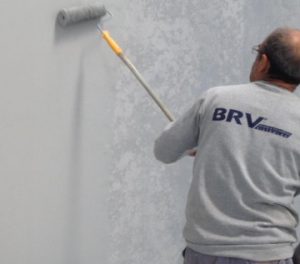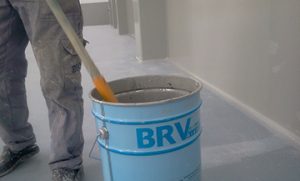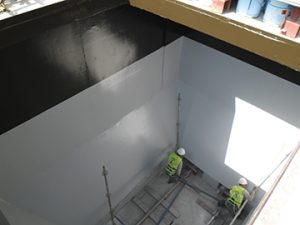
BRV SC 905 • CHEMICAL RESISTANT SOLVENT-FREE EPOXY TOP COAT FOR VERTICAL SURFACES
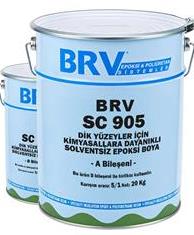
Two-component, solvent-free, antibacterial, and chemical-resistant epoxy topcoat paint (for vertical surfaces)
Product Description:
This two-component, solvent-free epoxy topcoat is a high-performance coating solution developed for vertical surfaces where chemical resistance and hygiene requirements are paramount. Its antibacterial properties minimize the formation of microorganisms, contributing to the maintenance of hygiene standards. Its special formula, exhibiting high resistance to chemicals, maintains surface integrity even in aggressive environments.
Thanks to its solvent-free composition, it is safe for the environment and user health, offering low odor and comfortable working conditions during application. It provides strong adhesion to concrete and metal surfaces, creating a long-lasting and durable coating. Its easy-to-clean nature reduces maintenance costs and maintains hygienic surface performance for an extended period.
Areas of application:
This epoxy topcoat paint can be safely used in areas where hygiene is critical, such as laboratories, hospitals, food facilities, swimming pools, water tanks, and wastewater treatment plants. It is also preferred as a topcoat on concrete and metal wastewater pipes and on vertical surfaces of industrial facilities exposed to chemicals.
Key Features:
- High resistance to chemical substances
- Hygienic surface with antibacterial properties
- Suitable formula for vertical surfaces
- Strong adhesion to concrete and metal surfaces
- Easy to clean and long-lasting
- Environmentally and user-friendly with solvent-free formula
|
Type |
TS EN 1504-2 / Nisan 2008 Principle 5 (PR): 5,1 Physical Resistance / Surface Improvement Coating Application ( C ) |
|
Color |
RAL colors |
|
Appearance |
Bright |
|
Solid Matter By Weight, % |
95 |
|
Density |
1,55 g/cm³ |
|
Waste |
0,200-0,500 kg / m2 |
|
Package |
20 kg A Component + 4 kg B Component: Total 24 kg |
|
Flash Point |
>25 °C |
|
Mixture Ratio |
5 / 1 |
|
Application Methods |
Brush, Roller, Airless Gun, Trowel |
|
Mixture Life |
30 minutes / 25°C |
|
Shelf Life |
1 year |
|
Waiting Time Between Coating |
12 hours/ 25°C |
|
Drying Time |
12 hours / 25°C |
|
Mechanical Strength |
7 days |
|
Shore D Hardness Fire Reaction Class |
70 (7 days / 25°C C |
|
Equipment Cleaning |
Epoxy Thinner |
SURFACE PREPARATION
The surfaces to be applied should be clear of grease, dust and dirt. Free particles on surfaces, cement slurry on cement surfaces and parts that prevent gluing should be cleared.
MIXTURE PREPARATION
The concrete surface where application would be done should be primed using SC 210 multi-purpose Epoxy Primer, SC 215 Epoxy Primer without Solvent or SC 270 Low Viscosity Epoxy Impregnated Primer. On moist surfaces SC 220 should be used and on 100% moist surfaces Epoxy Primer. 12 hours after the priming process, epoxy painting process can start. In brush or roller applications, epoxy brush or roller should be used. If it is necessary, the product itself can also be used as the first layer primer.
APPLICATION CONDITIONS
* The surfaces must have sufficient endurance. Concrete should endure minimum 25 N/mm² pressure and endure against minimum 1,5-2 N/mm² pull-off strength
* The surface should be clean, straight, dry and should not exceed 5% moisture and if moisture is above this rate, SC 220 should be used on moist surfaces and Epoxy Primer on 100% moist surfaces
* The priming should have completed its curing prior to moving on to the top layer epoxy painting process
* Application should be avoided under 10°C and in high moisture environments.
* The mixture ratios should be paid attention to.
STURDINESS TABLE AGAINST
CHEMICALS / ACIDS – CORROSIVE WATER – ORGANIC SALTS
| ENIRONMENT | CONCENTRATION | STORAGE TEMPERATURE | STURDINESS PERIOD AND EVALUATION
7 DAYS 1 MONTH 6 MONTHS 12 MONTHS |
||||||
| ACETIC ACID | % 2 | 90°C | X | X | X | XX | |||
| LACTIC ACID | % 10 | 20°C | X | XX | XX | XX | |||
| CITRIC ACID | % 10 | 20°C | X | X | X | XX | |||
| AMMONIA | % 25 | 20°C | XX | XX | XX | XX | |||
| HYDROGEN PEROXIDE | % 1 | 90°C | X | XX | XX | XX | |||
| SODIUM HYPOCHLORITE | %12-%16 | 90ºC | X | X | X | XX | |||
| IRON SULFATE | % 20 | 20°C | XX | XX | XX | XX | |||
| ALCOHOL | % 98 | 20°C | X | X | X | X | |||
| FORMALDEHYDE | % 20 | 20°C | X | X | XX | XX | |||
| CAUSTIC | % 2 | 90°C | X | X | X | X | |||
| PHENOL | 20°C | X | X | X | XX | ||||
| PHOSPHORIC ACID | % 10 | 20°C | X | X | X | X | |||
| SODIUM SULFATE | % 8 | 90°C | X | X | X | X | |||
| FORMIC ACID | % 5 | 20°C | X | X | X | X | |||
| SALTY WATER | % 8 | 90°C | X | X | X | X | |||
| X : No Damage XX: Color fading | xxx : Quite harmful xxxx : Excessive damage exists | ||||||||
|
|||||||||