
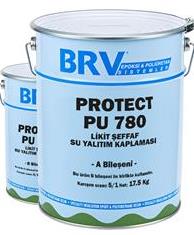
PROTECT PU 780
DESCRIPTION
A two-component, solvent-based, high-adhesion, flexible aliphatic polyurethane liquid glass transparent waterproofing coating. It is resistant to UV rays, harsh weather conditions, and pool chemicals.
AREAS OF USE
It is used on glazed and ceramic-coated surfaces of terraces, roofs, and swimming pools; for sealing capillary cracks in joints; and on surfaces such as glass mosaics, marble, natural stone, wood, and concrete. It is ideal for surfaces where high resistance to chemicals, impacts, and abrasion is required alongside superior waterproofing.
SURFACE PREPARATION
All loose particles, paint residues, oil, and dirt on the surface must be completely cleaned. Cracks and fractures must be repaired, and the surface must be roughened before application.
MIXING PREPARATION
Components A and B must be mixed with a low-speed mixer for at least 3-4 minutes until a homogeneous mixture is obtained, paying strict attention to the mixing ratios. The product is ready for application immediately after mixing.
APPLICATION CONDITIONS
-
Surfaces must be free from moisture and dust.
-
Application should be avoided in environments below 10°C or in highly humid conditions.
-
Mixing ratios must be strictly followed.
-
Relative humidity should not exceed 70% during application.
-
It cannot be used as a protective coating over water-based or alkyd-based single-component oil paints. If applied, it will dissolve the underlying oil paint and cause the surface to blister/swell.
-
Avoid thick applications in a single coat.
-
Read the technical data sheet (TDS) thoroughly before proceeding with the application.
-
Our company cannot be held responsible for faulty applications that deviate from the technical data sheet.
SAFETY
This product is for professional use only. Before use, please pay attention to the safety warnings on the packaging; if necessary, refer to the Material Safety Data Sheet (MSDS). Do not breathe/inhale, avoid contact with skin and eyes, and do not swallow. Use appropriate occupational safety equipment. Take necessary precautions against fire and explosion hazards, as well as environmental pollution. Apply in well-ventilated areas.
TRANSPORTATION and STORAGE
-
The product should be stored between 5-35°C.
-
The product must not be exposed to direct sunlight.
-
Opened products should be stored in their original packaging with the lid tightly closed and must be consumed within a maximum of one week.
NOTE
BRV reserves the right to make improvements/revisions to the product and this technical document over time. This Technical Data Sheet (TDS) supersedes all previously published versions for this product and is valid for 5 years. The user must ensure they have the most up-to-date version of the technical documentation; if necessary, the validity of the document should be verified by contacting our company. The responsibility for whether the product is used for its intended purpose and the validity of the application conditions and methods lies with the applicator. BRV Epoxy Paint does not accept any warranty claims regarding consequences, occupational accidents, or direct/indirect damages resulting from the improper application of the products. The packaging values stated above are nominal values in standardized formulas by BRV. Under normal production conditions, deviations may occur within the scope of international standards.